


Cornwall Airport Newquay Explores Plans for Reusable Spaceplane Operations

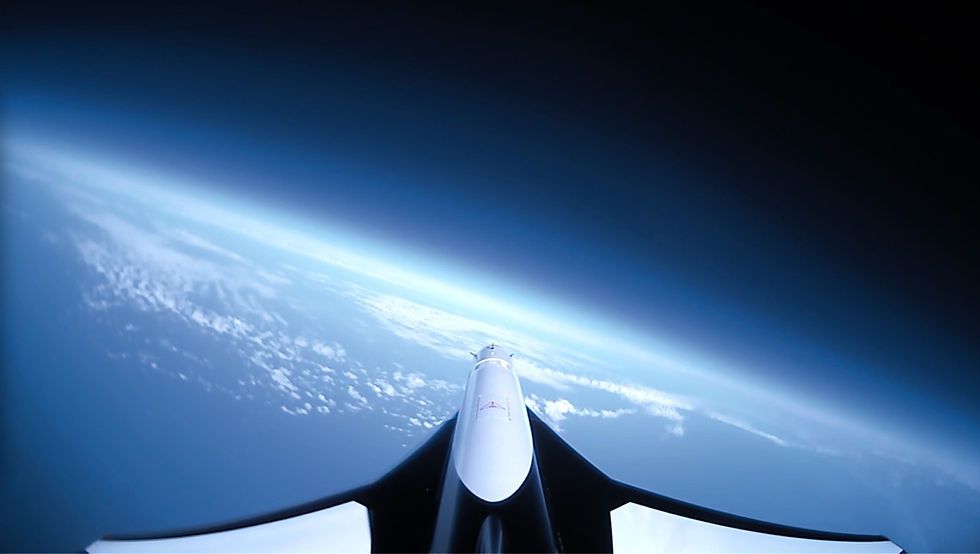
Cornwall Airport Newquay could take on a new role in the UK’s aerospace industry after Spaceport Cornwall signed an agreement with Dawn Aerospace to explore operating a reusable spaceplane from the site.
The two organisations have signed a memorandum of understanding covering the proposed Dawn Aerospace Suborbital Horizontal UK Launch Programme, known as DASH UK.
The project aims to establish a potential capability for conducting regular suborbital flights from Cornwall, supporting scientific research, aerospace testing and other specialist missions.
At the centre of the proposal is Dawn Aerospace’s Aurora, an uncrewed, rocket-powered spaceplane designed to take off and land on a conventional runway.
Unlike traditional rocket launches, the aircraft is being developed around a reusable model intended to allow relatively rapid turnaround between missions.
The Aurora is designed to reach altitudes of up to 100 kilometres and speeds exceeding Mach 3.7. It could carry payloads weighing up to 15 kilograms, providing opportunities for microgravity experiments, atmospheric research and high-speed technology testing.
Dawn Aerospace says the aircraft is designed for turnaround times as short as four hours. If the proposed operating model proves viable, this could allow the same vehicle to undertake multiple missions in a single day.
For Cornwall Airport Newquay, the agreement represents an opportunity to expand beyond conventional commercial aviation and strengthen its position within the UK’s growing aerospace sector.
Spaceport Cornwall, based at the airport, became the UK’s first licensed spaceport in 2022. Its infrastructure and runway provide a potential base for investigating horizontal spaceflight operations, alongside the airport’s existing aviation activities.
The proposed DASH UK programme would target research organisations, technology developers and commercial customers looking for access to the upper atmosphere and suborbital environment.
Potential applications include testing equipment at high speeds, conducting scientific experiments and developing technologies for future aerospace missions.
However, the project remains at an exploratory stage.
The memorandum of understanding provides a framework for the organisations to assess commercial demand, regulatory requirements and the operational arrangements needed to establish a regular service.
No start date has been confirmed for Aurora operations from Newquay, and the agreement does not mean that routine spaceplane flights have been approved or scheduled.
Dawn Aerospace expects its full-performance Aurora to begin flying in 2027.
Further work will be needed to determine how the aircraft could be operated from Cornwall and what approvals would be required before a UK service could begin.
The partnership also reflects wider efforts to diversify the activities supported by regional airports. As the aviation industry develops new technologies, facilities traditionally associated with passenger and cargo flights could play a greater role in aerospace research, testing and specialist operations.
For Cornwall, the potential benefits extend beyond the flights themselves. If the project progresses, it could create opportunities for collaboration with research institutions, technology businesses and other organisations working in the aerospace sector.
The next step is for Spaceport Cornwall and Dawn Aerospace to assess whether the proposed programme can be developed into a commercially and operationally viable service.
Although regular spaceplane flights from Newquay remain a possibility rather than a confirmed development, the agreement marks a further step in exploring how the UK’s existing airport infrastructure could support emerging aerospace technologies.


Comments